
Elementary particles
And now quark fusion?
4 Dec 2017
Fusion as we know it involves two nuclei of light atoms. Nature provides a dozen possible combinations for fusion, but in the present state of our technological capabilities only the fusion of deuterium (D) and tritium (T), two hydrogen isotopes, is accessible.
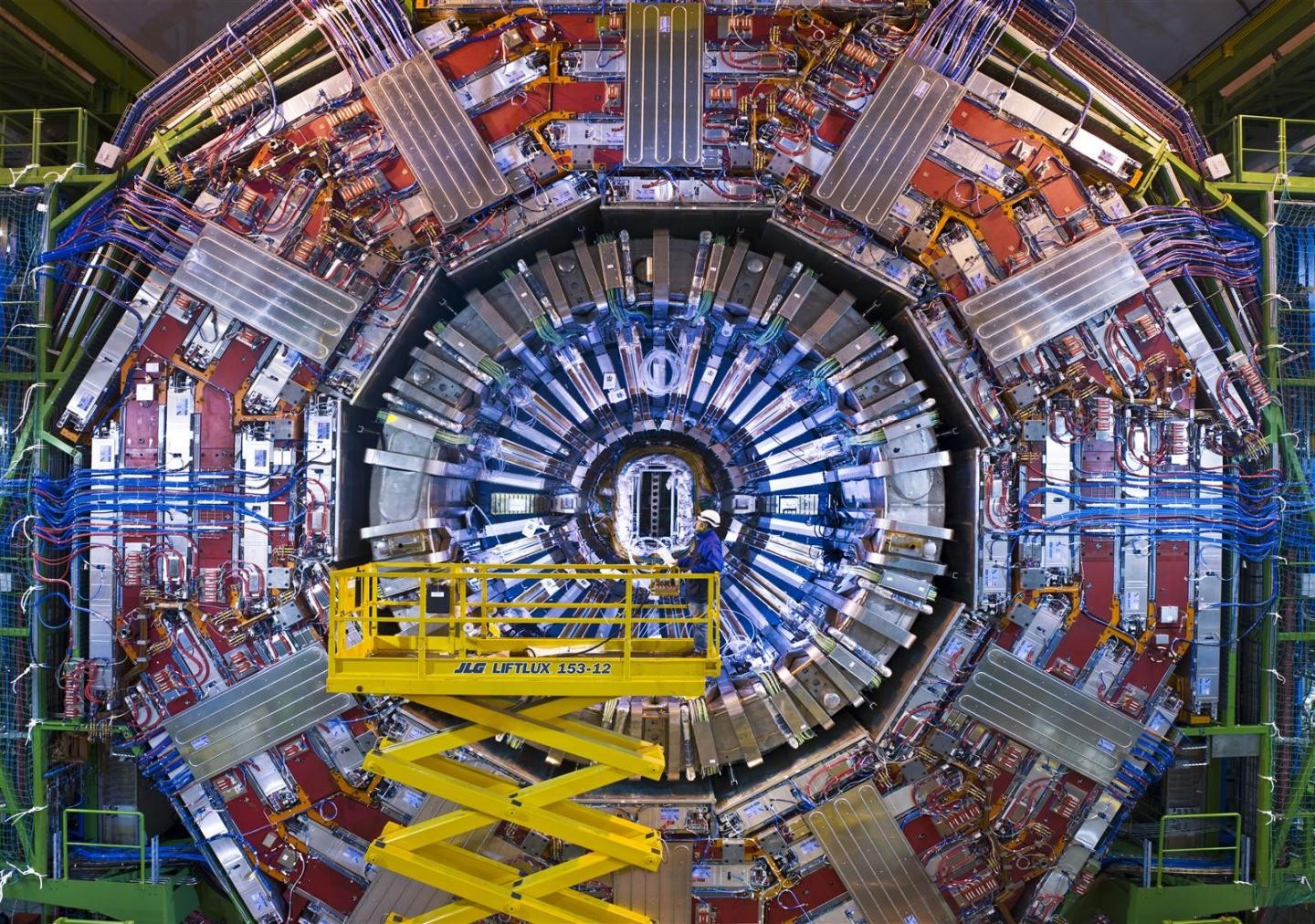
Researchers at Tel Aviv University and at the University of Chicago think that quark fusion could be technically feasible in a powerful particle accelerator such as CERN's Large Hadron Collider (LHC)
Recently, physicists at Tel Aviv University in Israel and at the University of Chicago in the US have found evidence suggesting that fusion could occur between quarks, an elementary particle that is a constituent of the nucleus. Quark fusion, they calculate, could generate approximately eight times more energy than the energy released during DT fusion.
How does one go about fusing quarks? Researchers Marek Karliner and Jonathan Rosner think it could be technically feasible in a powerful particle accelerator such as CERN's Large Hadron Collider (LHC). But they warn that their work is still purely theoretical — just like the fusion of nuclei was not so long ago in the 1920s.